Two examples that demonstrate how I approach content strategy — from audience insight through messaging decisions to measurable results.
Content Strategy, Messaging & Multi-Channel Campaign Execution
A faith-based youth filmmaking event in St. Louis — inaugural year, zero submissions coming in, two audiences to reach at once.
Unity Film Festival is a faith-based youth filmmaking event serving creators ages 7–17. For their inaugural year, the organizers had a compelling vision — but submissions weren't coming in. The audience didn't fully understand what the event was, who it was for, or how to participate.
The solution wasn't more promotion. It was clearer communication, built on a deeper understanding of who was reading it.
Every piece of content was being read by two audiences simultaneously — young creators who needed to feel excited and welcomed, and parents who needed to feel the event was trustworthy and purposeful. The messaging had to work for both without feeling like it was trying to speak to two different people.
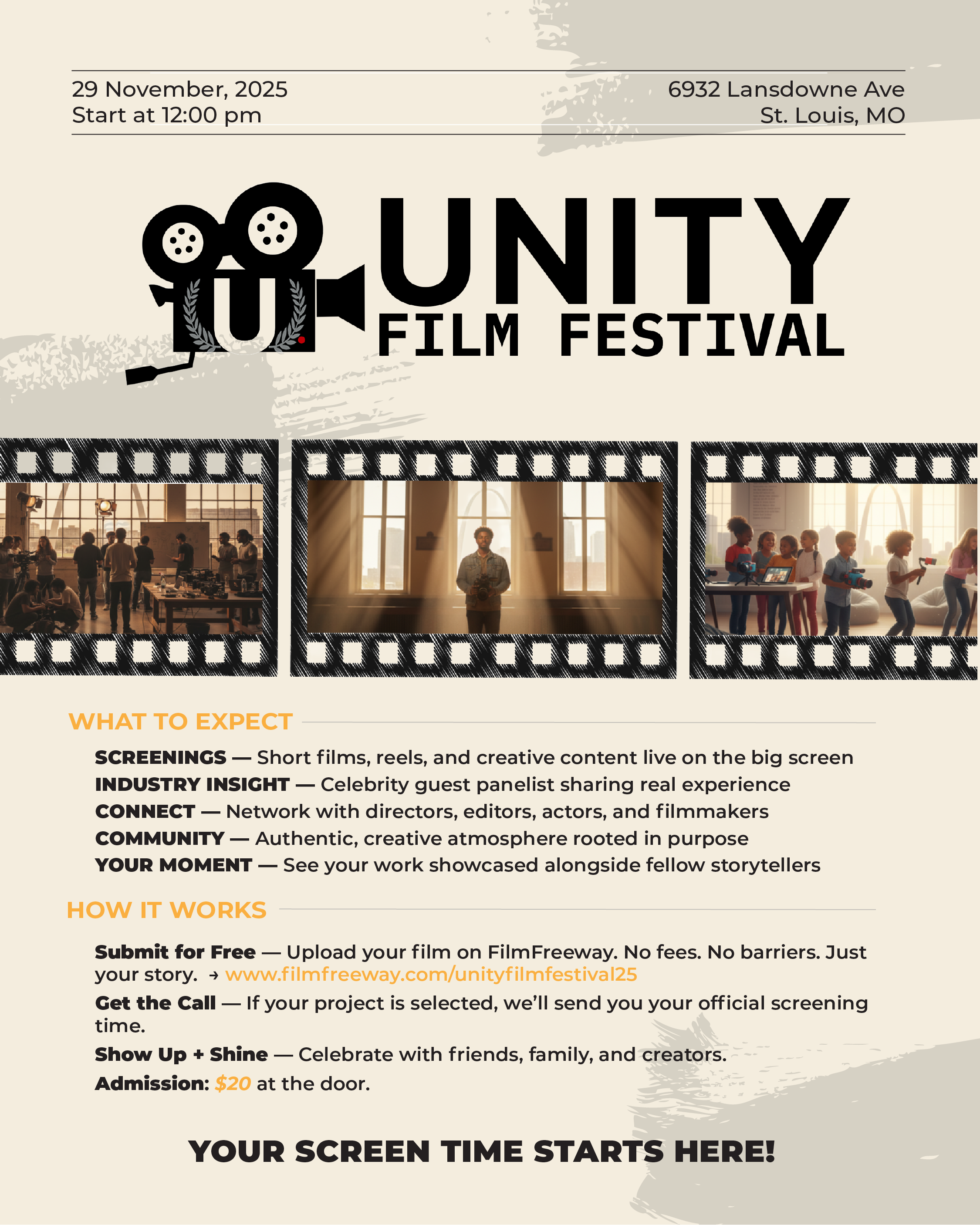
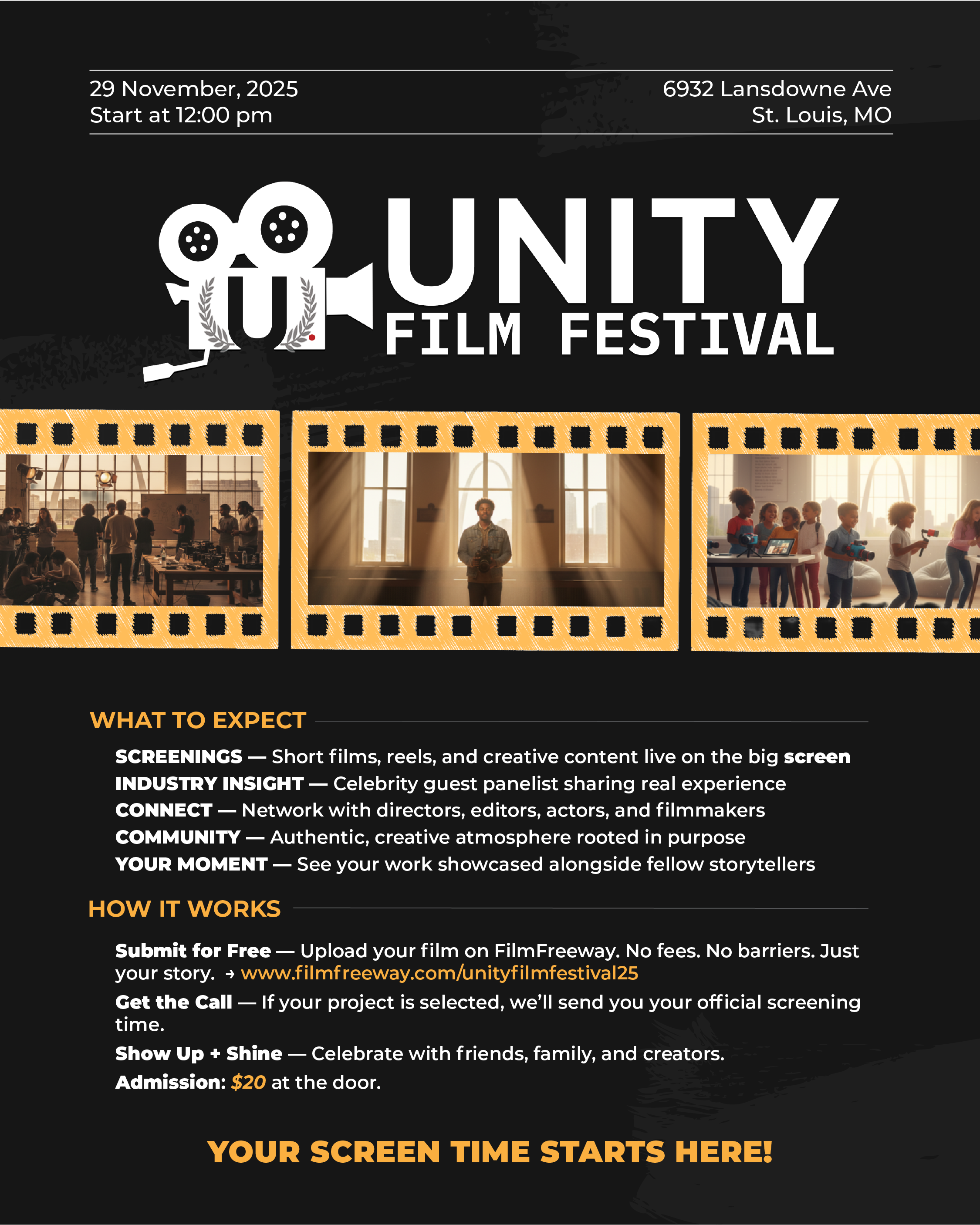
Print-ready community flyer — distributed across St. Louis with QR codes linking to UTM-tracked submission URLs. Designed to work alongside the social graphics and website as one unified campaign system.
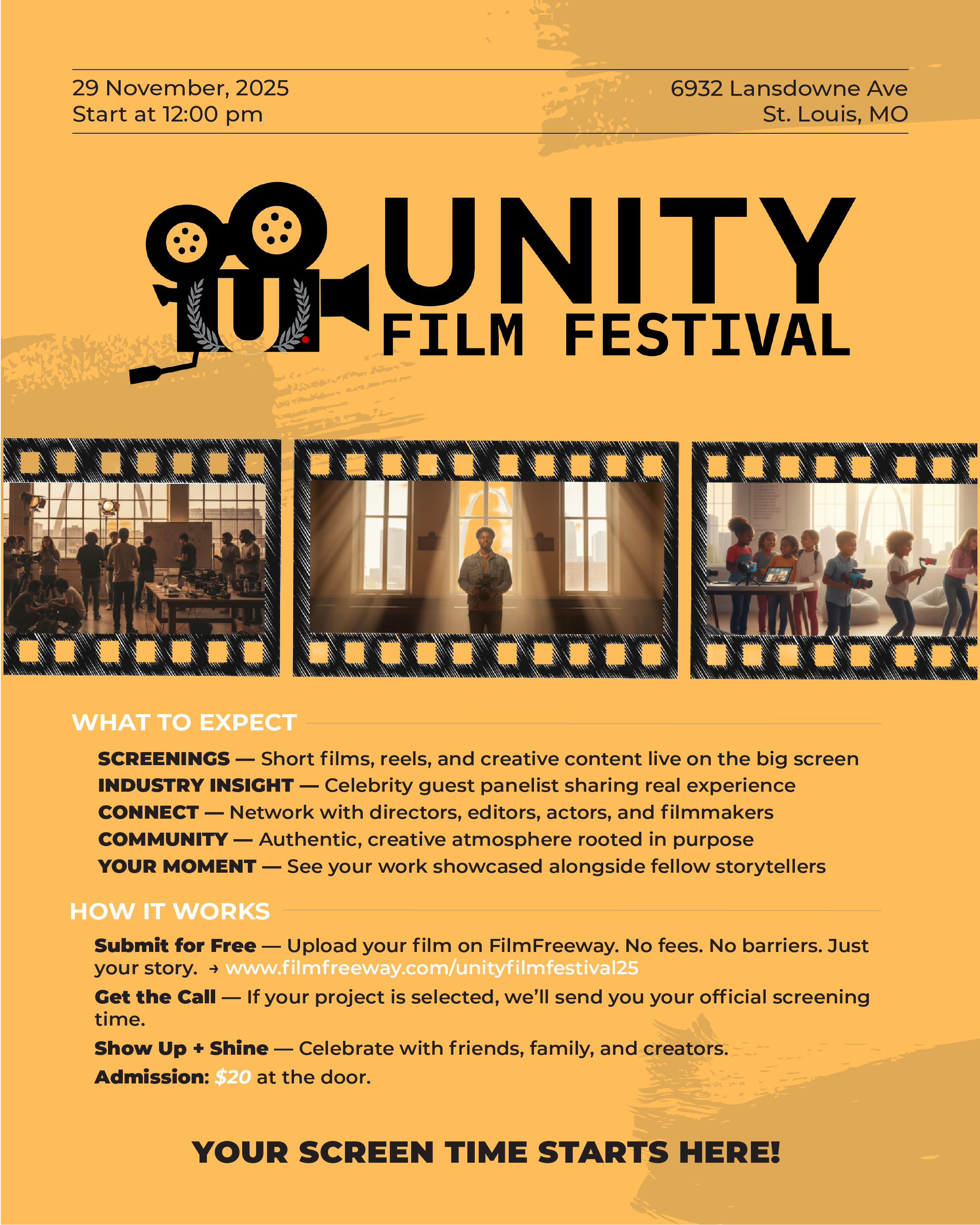
Campaign assets — three social colorways + website
The website was structured as a complete narrative arc — moving visitors from awareness through understanding to action. Every section answered a specific question the target audience was likely to have, in a deliberate sequence: What is this? Who is it for? Why does it exist? How do I participate? What will I experience?
The result was a site where first-time visitors — whether a 12-year-old creator or their parent — could understand everything they needed to know without searching for it.
The festival's faith-based theme became the anchor for all copy — every headline, section header, and CTA reinforced it without repeating it mechanically.
First-time young filmmakers are easily intimidated by formal application language. I structured participation as three plain steps — Submit for Free, Get the Call, Show Up + Shine — and wrote copy to remove every perceived barrier: "No fees. No barriers. Just your story."
Community flyers for physical distribution, social media graphics in three colorway variants for digital reach, and a complete website moving visitors through a clear narrative arc. Each format served a different moment in the audience's awareness journey.
Embedded QR codes on all printed flyers with UTM-tracked Bitly links so we could measure how many submissions came from physical community distribution versus social media posts. Google Forms handled both event sign-ups and film submissions — keeping the process zero-cost and giving the client real performance data for the first time.
The client achieved their submission goals for the festival's inaugural year. The messaging system built — from the theme down to the CTA copy — gave the organizers a clear, consistent voice they could use across every touchpoint.
The UTM and QR attribution gave them real data on which distribution channels were driving action — something they had no visibility into before. Most importantly, young creators and their families immediately understood what the festival was, why it existed, and how to be part of it.
Brand Development, Content Strategy & Organic Growth
From 50 tickets to sold-out 500+ — building a regional combat sports brand using zero paid advertising.
STL Fight Sports is a regional combat sports event brand operating under 8 Count Promotions in St. Louis. When the client came to me, they were selling roughly 50 tickets per event and had no consistent brand identity, no content system, and no real social media presence.
They needed help promoting their events but had no paid advertising budget. The challenge was building awareness, ticket sales, and a loyal fanbase from nearly nothing — using content alone.
The most powerful promotional asset the event already had was sitting in the ring: the fighters themselves. Every fighter has a personal network — friends, family, training partners, and fans who would show up to watch them compete. The question was how to activate that network at scale without spending money on ads.
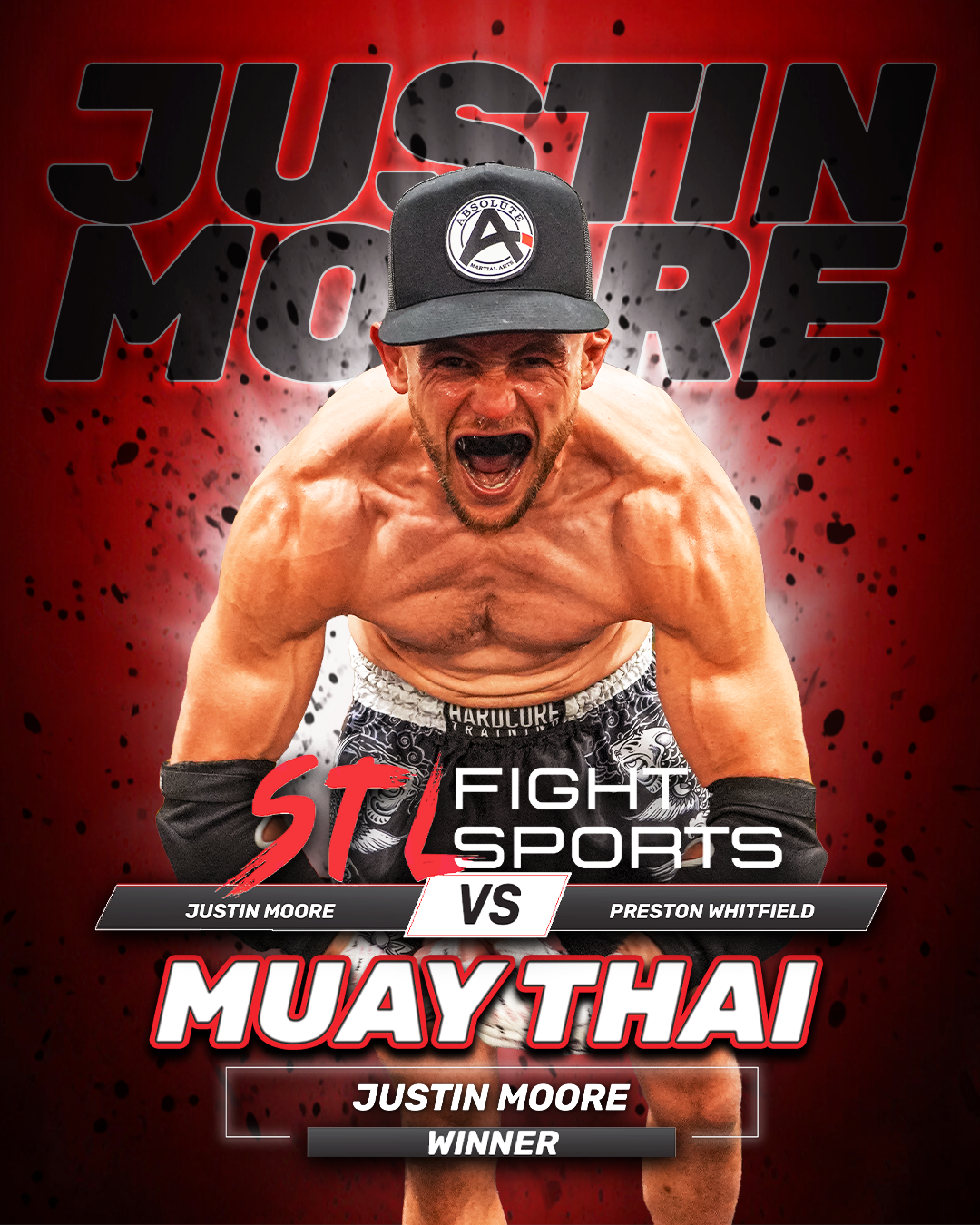
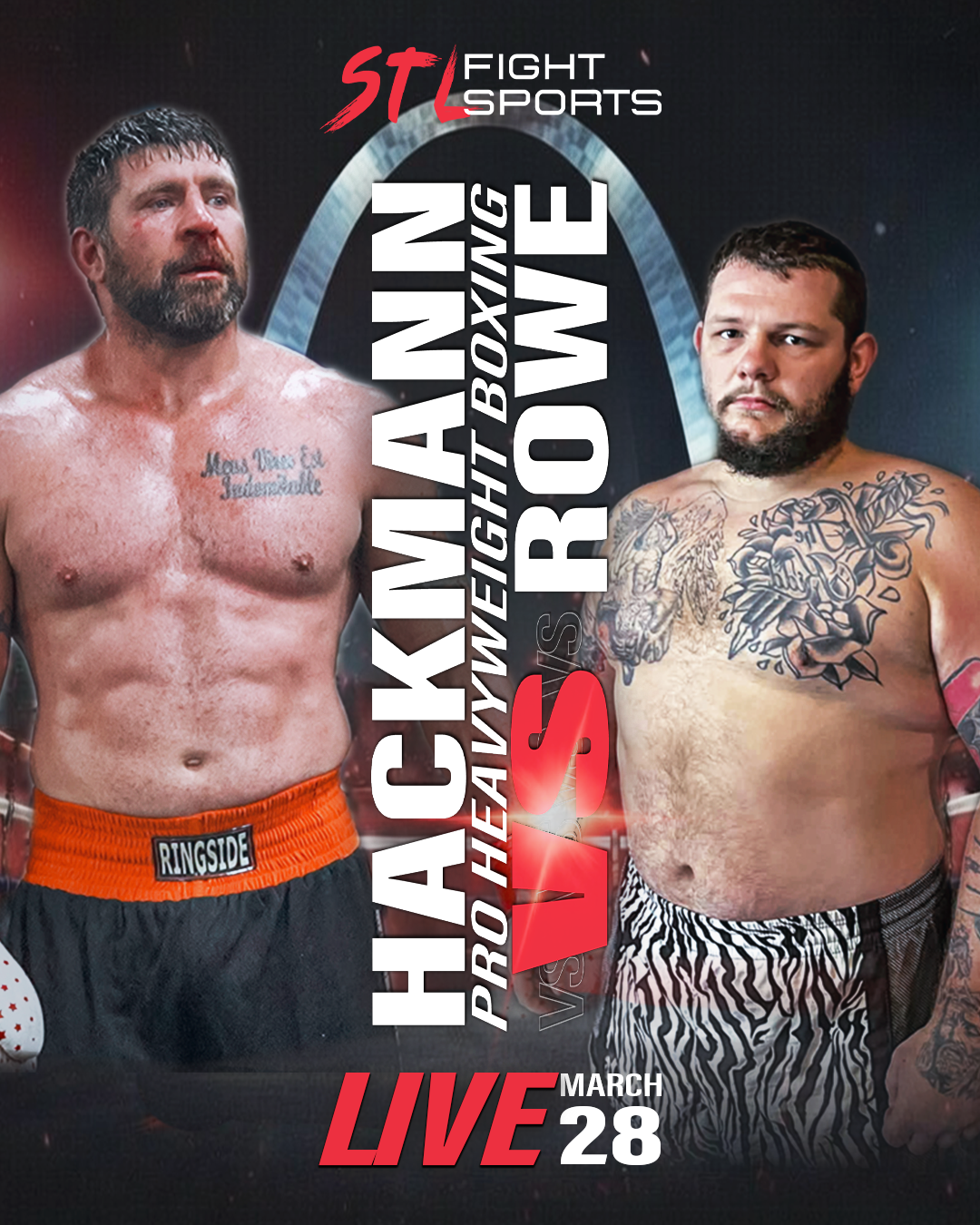
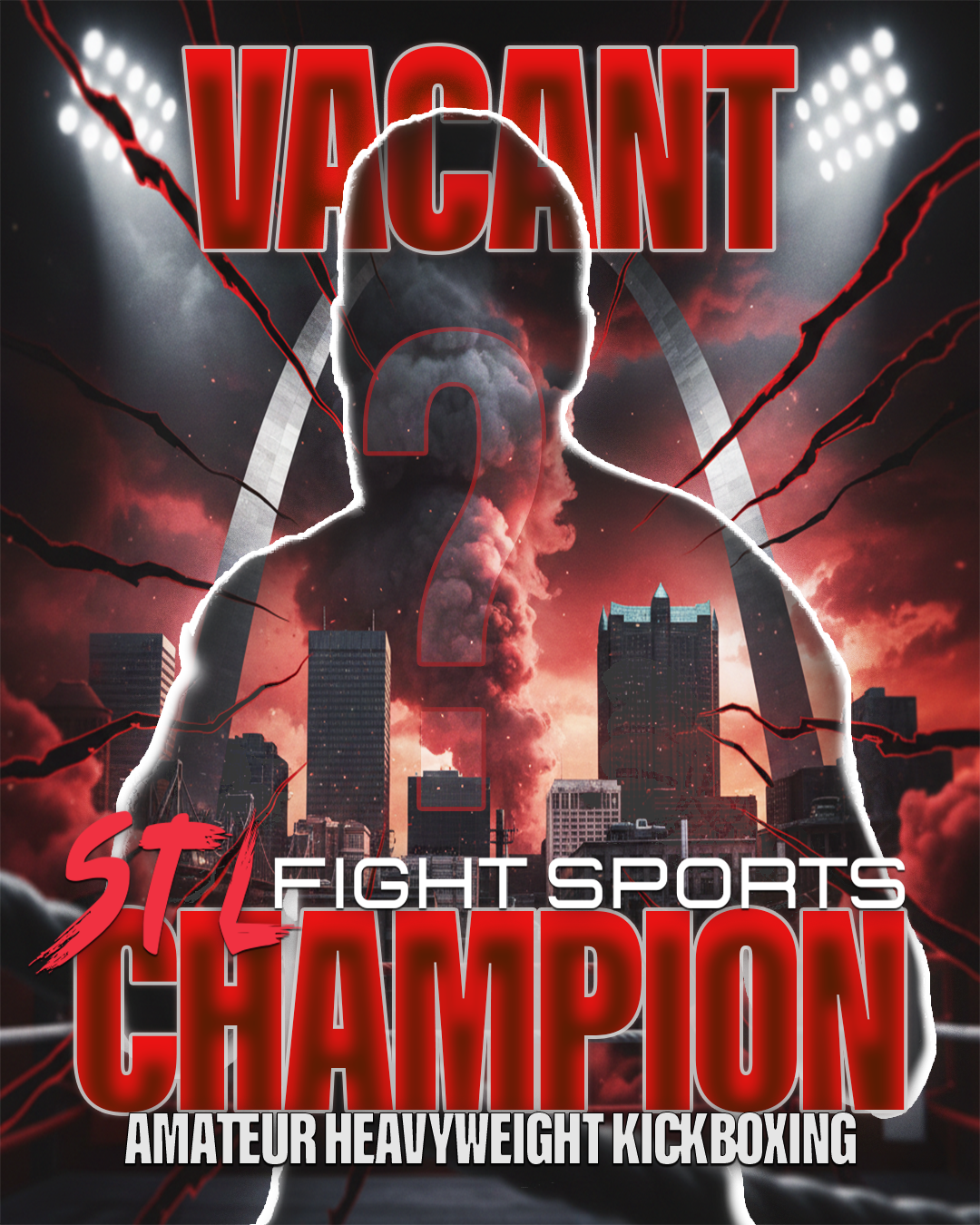
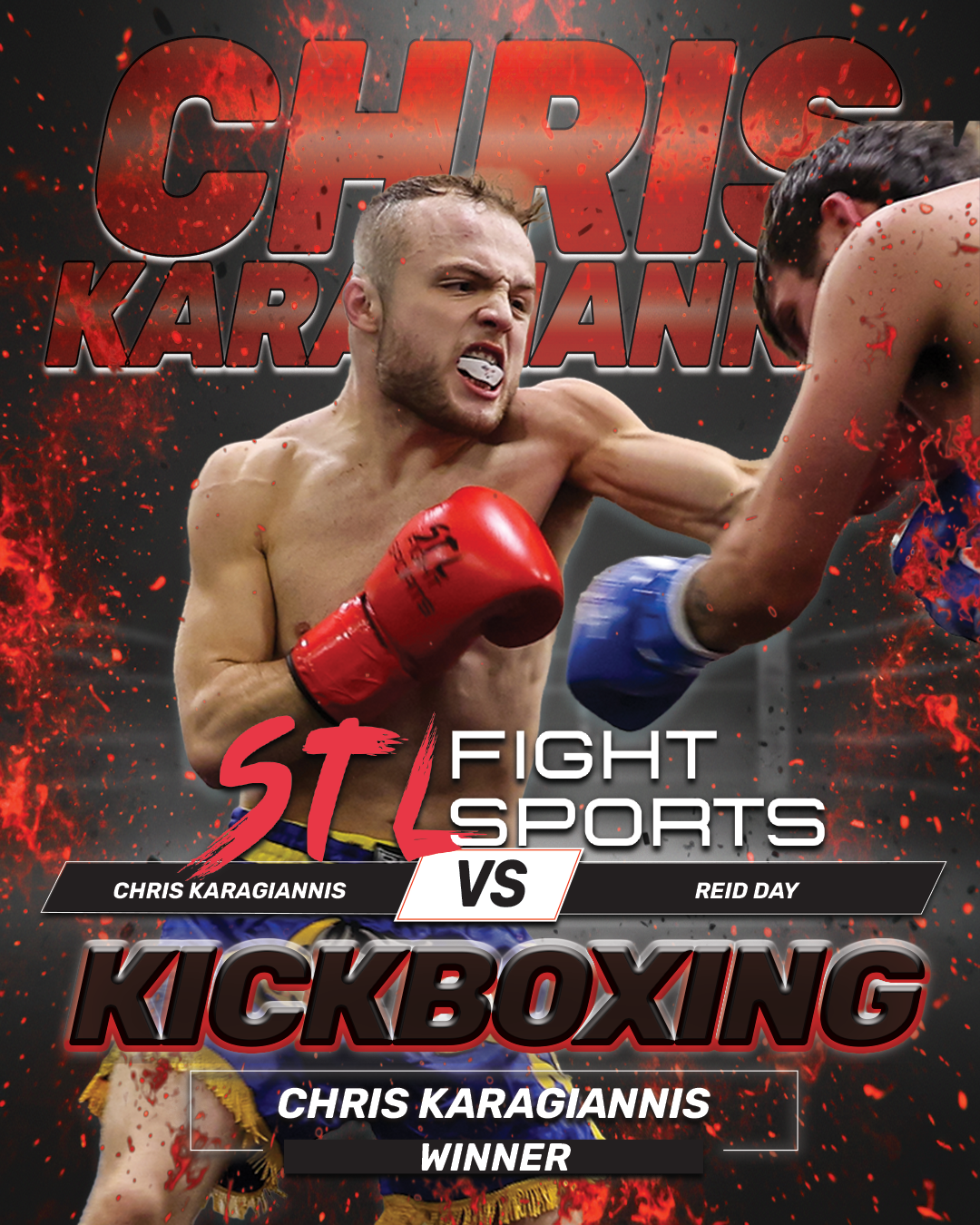
Winner announcement graphics, promotional fight cards, and brand identity assets — every piece built for shareability
Before any content strategy could work, the brand needed to look the part. I designed the STL Fight Sports logo and built a complete visual identity system — color palette, typography, graphic templates, and branded overlays for all photography and video. Every piece of content that left the event would carry the brand automatically, whether posted by the official account, a fighter, or a fan.
The strategy was entirely referral and self-promotion driven. I created a content system that gave fighters something worth sharing — professional graphics, highlight clips, and winner announcements that made them look credible and exciting. When fighters shared that content, they weren't promoting the event. They were promoting themselves. The event came along with it.
I built a repeatable content production workflow around each event: ringside photography, highlight clips, and branded winner announcement graphics posted immediately after results. Fighters and their supporters shared them within minutes of the decision, creating a wave of organic reach at exactly the moment emotional investment was highest.
The content system was designed so that reach compounded over time. Each event produced more branded content, more fighter shares, and more exposure to new audiences who then recognized the brand at the next event. By the time someone saw their third or fourth STL Fight Sports post — from multiple different accounts — they already knew the brand.
Over two years, STL Fight Sports went from selling 50 tickets per event to selling out at 500+ tickets per event. Video content across fighter and fan accounts accumulated nearly one million views — entirely through organic distribution with no paid media spend.
The growth wasn't driven by advertising. It was driven by giving the community something they were proud to share. Fighters became brand ambassadors without being asked to. Fans became loyal because the content made them feel connected to something real.